Bikramiya Chaudary, a 45-year-old farmer from the Chitwan district of Nepal, once faced a gruelling annual cycle. The crops produced on her family’s small plot were only sufficient to feed them for less than six months of the year. To survive the remaining months and cover other essential expenses, Bikramiya and her family were compelled to leave their village and work as daily wage laborers for wealthy landlords.
Her circumstances took a dramatic turn when she joined a local farming group under the “Efficient Land Management for Socio-Economic Enhancement in Southern Nepal” program. Implemented by MRC Nepal with financial assistance from OPEC/OFID, the initiative aimed to empower resource-poor farmers by maximizing the potential of their unused land.
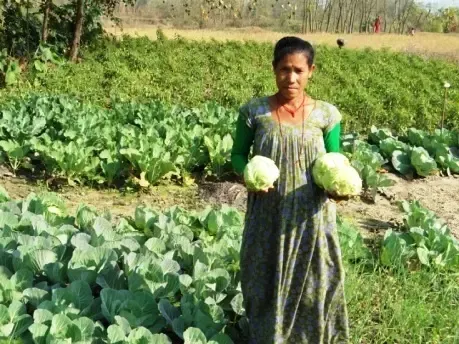
With dedicated technical guidance and agricultural inputs provided by MRC Nepal, Bikramiya made the bold decision to cultivate vegetable crops on her family’s marginal, fallow land located near the riverbank. Starting small, she planted cauliflower, chili, tomato, and cabbage across a 1,008-square-meter plot.
A Harvest Beyond Expectations
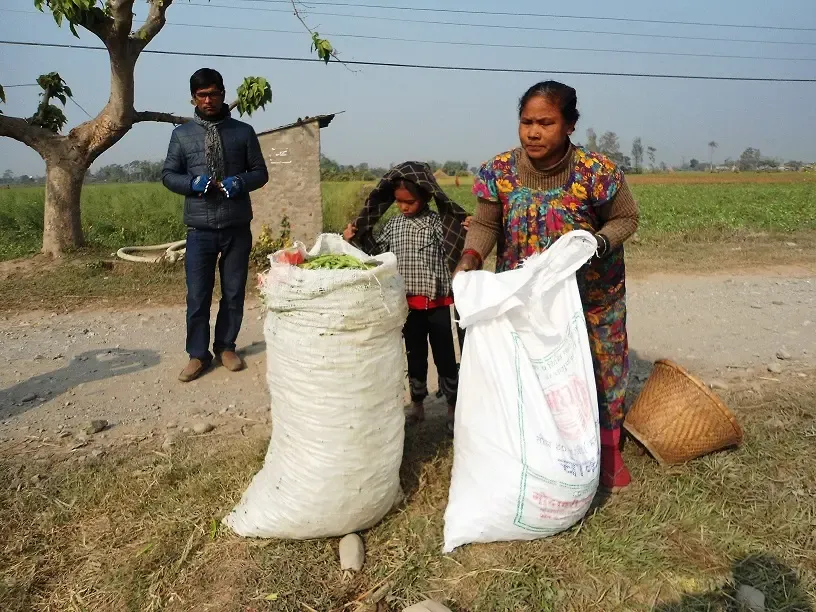
The results were spectacular. She quickly managed to fetch premium prices for her high-quality yield, earning approximately NRs. 36,000 (equivalent to an impressive $4,045 per hectare) in a very short period.
“I never expected such an incredible crop and income from this fallow land,” Bikramiya expressed joyfully during a monitoring visit from project agencies. Thrilled by the success of her very first harvest, she immediately began expanding the area dedicated to commercial vegetable cultivation.
This new, sustainable stream of income has been transformative for her family, allowing her to comfortably cover household expenses and invest in her children’s education.
“My husband now assists me in vegetable farming, and we no longer have to leave our home for daily wage labor,” she shared proudly.
Reflecting on her journey, Bikramiya remains ambitious: “I am still in the learning phase of vegetable farming. I hope this support continues for another two or three years so that I can establish myself as a fully commercial, self-reliant farmer.”